Business Travel Super Simplified
Designed for businesses seeking flexibility and a wide range of choices



To succeed as an operations manager, professionals need a balanced mix of operational skills, leadership ability and industry knowledge. This guide explains the operational skills required for operations management, outlines essential operations manager qualifications and details how to become an operations manager through education, experience and continuous learning.
An operations manager is the backbone of an organisation. 74% of employees report higher satisfaction and motivation when operations are well managed, as it directly impacts productivity, efficiency and day-to-day coordination. A company’s success depends heavily on the skills and decision-making ability of its operations manager.
The success of a company depends heavily on the operations manager's skills. This role requires a balanced combination of leadership ability, technical knowledge, and strategic thinking.
This blog explores the skills needed for operations management, followed by the qualifications and tools that help build strong operational skills.
| Add savings & convenience to your corporate travel! |
Some of the most important skills needed for operations management include:
Modern operations rely on accurate data. An operations manager must interpret numbers, identify trends and make data-driven decisions. Knowledge of Excel, Power BI, SQL or Google Analytics is extremely useful.
Identifying inefficiencies and removing bottlenecks is a core responsibility. Understanding methodologies such as Lean, Six Sigma and Kaizen helps improve workflows and productivity.
In sectors such as manufacturing, retail and logistics, managing inventory and tracking supply chains is essential. Experience with ERP systems supports better coordination.
Operations managers often lead initiatives such as launching new processes, improving systems, or overseeing cross-functional initiatives. Skills in planning, scheduling, budgeting and resource allocation are therefore essential.
Maintaining quality standards is a critical operational skill. Managers must understand safety requirements, audits, regulatory guidelines and compliance procedures.
Operations managers are expected to be comfortable using business tools, including:
While often labelled as soft skills, communication and leadership are core operation manager skills. Operations managers work across departments and must communicate clearly, manage expectations, resolve conflicts and motivate teams effectively.
For those wondering how to become an operations manager, the path typically includes the following:
Most employers prefer candidates with a Bachelor’s degree in fields such as:
A Master’s in Business Administration (MBA) can significantly strengthen your profile, especially for senior roles.
Certifications validate your operational skills and make your CV stand out. Popular options include:
Most organisations look for 3–7 years of experience in roles such as:
Operation requirements vary across sectors. For example, hospitality operations differ from manufacturing operations. Understanding industry-specific workflows enables better decision-making and planning.
| Unlock efficiency and savings for your business travel today! |
To strengthen operational skills, professionals benefit from a mix of digital tools, courses and hands-on experience. Using these tools and platforms regularly helps in mastering the skills required for operations management.
Effective operations management contributes directly to business performance in several ways:
By analysing processes and eliminating waste, operations managers help companies reduce delays, cut costs, and utilise resources better.
Efficient workflows and structured systems boost productivity across all departments.
When operations run smoothly, customers receive faster service, better quality and improved reliability.
Through budgeting, forecasting and waste reduction, operations managers help organisations save significant money.
Since operations managers work with HR, finance, logistics and customer service teams, they ensure everyone stays aligned toward business goals.
Becoming an operations manager requires the right mix of technical skills, practical experience and educational qualifications. With strong operational skills, industry knowledge and proper training, anyone can grow into this role. As organisations increasingly rely on digital systems to manage workflows, tools that streamline operations, including corporate travel and expense management platforms like myBiz, help operations managers maintain better visibility, cost control and compliance. By investing in skill development and using the right tools like this, professionals can build a rewarding career in operations.
| Follow us on LinkedIn for business travel insights! |
Ans. You need data analysis, process improvement, project management, communication and supply chain knowledge.
Ans. A bachelor’s degree, relevant experience and certifications like Lean Six Sigma or PMP.
Ans. Start with a degree, gain operational experience, build technical skills and pursue certifications.
Ans. Yes, it offers stable career growth, consistent demand and opportunities across multiple industries.
Related Blogs:
| myBiz - winning customer appreciation every time! |  |  |  |
Our features and benefits are curated to suit the needs of every employee using myBiz.
Who manages company's travel expense
Simplified Admin Panel to manage all employees and their expenses
Detailed reports on regular basis to keep a track on your spends
Dedicated Support Manager from myBiz to take care of your queries
Who books for employees
Book using the traveller's Policy to ensure the right options are booked
Shortlist & share travel options to employees directly from myBiz
Track your requests & get the job done from one single place
Who travel for business
Special Corporate Fares in flights to ensure you get more benefits at reduced price
myBiz Assured Hotels for top-rated stay options
Sanitized Cabs to safely pick & drop you to your destinations
Grab all the corporate benefits by creating your account now
Get started by providing minimal details like employee size, organisation name, etc.
Gain most of the benefits by setting up employee-friendly policies (only Admin users).
Invite your employees to myBiz so that they could enjoy all the corporate benefits.
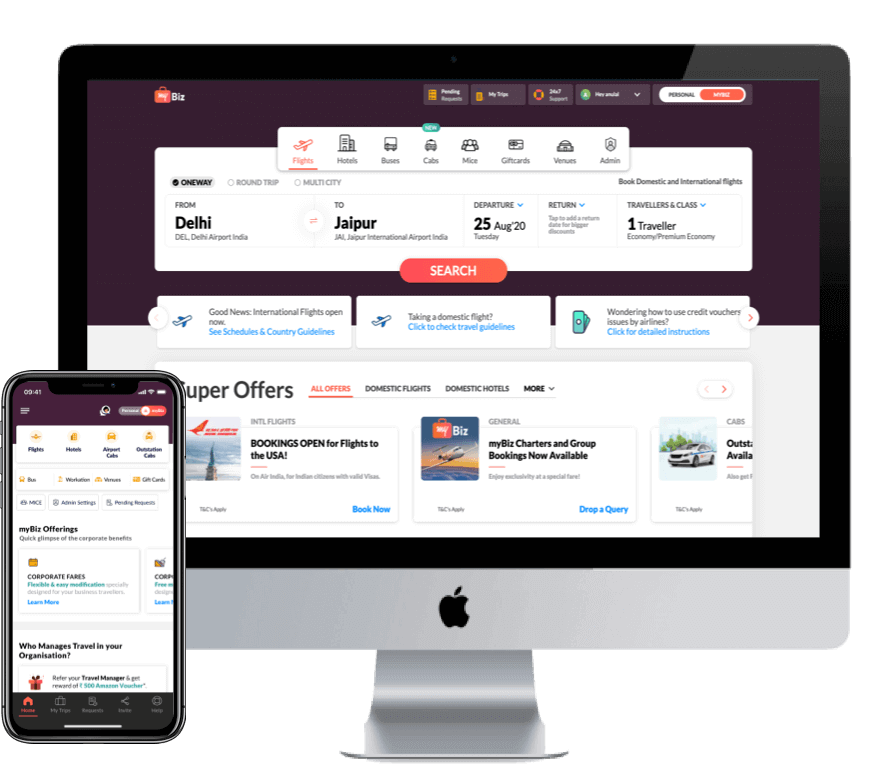
With our super intuitive and connected web application & mobile app, myBiz is always available to address all your business travel needs.




myBiz powers many of the small, medium & large size organisations to help them save on their travel budget and achieve more from their business travels. Read interesting stories from these organisations.