Business Travel Super Simplified
Designed for businesses seeking flexibility and a wide range of choices



Conference events play a key role in enabling structured communication, networking, and knowledge sharing across industries. This guide explores their types, planning process, and management essentials. It also highlights how businesses can streamline conference events for better outcomes.
Conference events have become a key way for modern businesses to connect, align and grow, especially as teams are now spread across different regions and time zones. The global business events industry is expected to cross USD 2.1 trillion by 2032, driven by hybrid formats and growing cross-border collaboration.
But anyone who has planned one knows it is not always simple. Coordinating travel, managing schedules, keeping costs under control, and ensuring everything runs smoothly for attendees can quickly become complex.
| Add savings & convenience to your corporate travel! |
Conference events are formal gatherings where professionals, industry leaders, or stakeholders meet to discuss specific themes, share insights and exchange knowledge. They are structured, scheduled and goal-oriented.
Unlike regular meetings, they involve larger groups across industries or regions and can be conducted in physical, virtual, or hybrid formats depending on organisational needs.
Conference events can be classified into several types based on purpose and audience:
Organisations invest in conference events for several strategic reasons:
Well-executed conference events can directly support business growth by improving visibility, credibility, and trust within an industry.
Planning effective conference events requires structured coordination. Key steps include:
Strong conference management ensures the smooth execution of conference events. Key elements include:
| Unlock efficiency and savings for your business travel today! |
While both involve professional interaction, they differ in scale and purpose:
| Aspect | Conference Events | Corporate Meetings |
| Size | Large groups | Small teams |
| Purpose | Knowledge sharing | Decision making |
| Duration | Multiple days | Short sessions |
| Format | Structured agenda | Flexible discussion |
A conference event is broader in scope and often includes multiple sessions, speakers, and networking opportunities.
Technology is reshaping how conference events are planned and delivered:
Platforms like myBiz support businesses with AI-driven suggestions, such as hotel and cab bookings aligned with flight schedules, helping reduce coordination effort for conference events.
Even experienced planners face challenges such as:
To improve outcomes from every conference event, consider the following:
Conference events are strategic tools that go beyond meetings, helping businesses strengthen communication, collaboration, and decision-making. Their success depends on clear planning, efficient coordination, and smooth execution rather than scale alone. As business travel and logistics become more complex, reducing operational effort becomes essential.
| Follow us on LinkedIn for business travel insights! |
Ans. Conference events are structured business gatherings focused on knowledge sharing, networking, and strategic discussions.
Ans. Planning includes defining objectives, budgeting, managing travel, and using tools like myBiz to streamline logistics for conference events.
Ans. A conference event is larger and more structured, while meetings are smaller and focused on decision-making.
Ans. They improve collaboration, build partnerships and support knowledge exchange across teams and industries.
Related Blogs:
| myBiz - winning customer appreciation every time! |  |  |  |
Our features and benefits are curated to suit the needs of every employee using myBiz.
Who manages company's travel expense
Simplified Admin Panel to manage all employees and their expenses
Detailed reports on regular basis to keep a track on your spends
Dedicated Support Manager from myBiz to take care of your queries
Who books for employees
Book using the traveller's Policy to ensure the right options are booked
Shortlist & share travel options to employees directly from myBiz
Track your requests & get the job done from one single place
Who travel for business
Special Corporate Fares in flights to ensure you get more benefits at reduced price
myBiz Assured Hotels for top-rated stay options
Sanitized Cabs to safely pick & drop you to your destinations
Grab all the corporate benefits by creating your account now
Get started by providing minimal details like employee size, organisation name, etc.
Gain most of the benefits by setting up employee-friendly policies (only Admin users).
Invite your employees to myBiz so that they could enjoy all the corporate benefits.
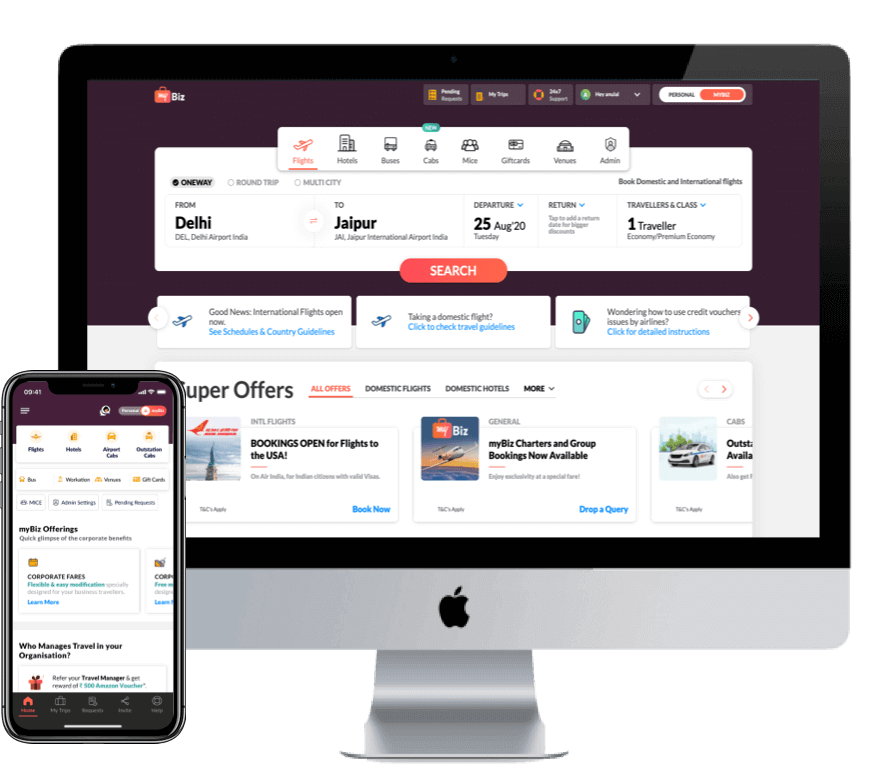
With our super intuitive and connected web application & mobile app, myBiz is always available to address all your business travel needs.




myBiz powers many of the small, medium & large size organisations to help them save on their travel budget and achieve more from their business travels. Read interesting stories from these organisations.